“I’d Rather Die Fighting Than Beg,” Otafiire Fires Back at Muhoozi
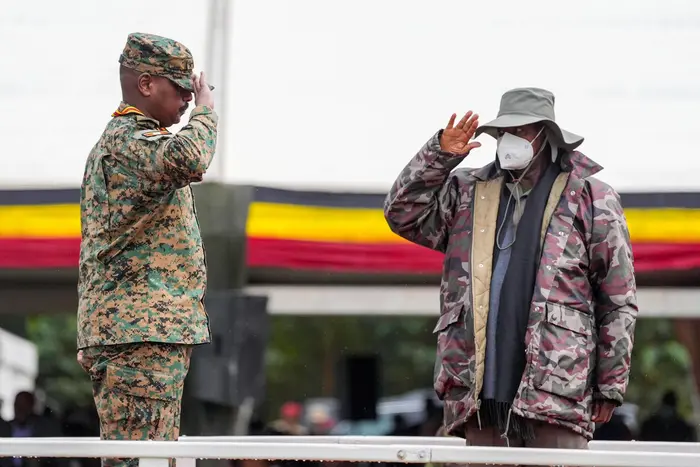
CDF Gen Muhoozi Kainerugaba has given Minister Kahinda Otafiire one week to apologise over parliamentary remarks on generals and violence, sparking a public clash between two of Uganda's most senior military figures.

A parliamentary speech about political tolerance has escalated, within days, into a direct public confrontation between two of Uganda’s most consequential military figures — one a sitting cabinet minister and bush-war veteran, the other the country’s serving Chief of Defence Forces and chairman of a political movement actively positioning for the presidency.
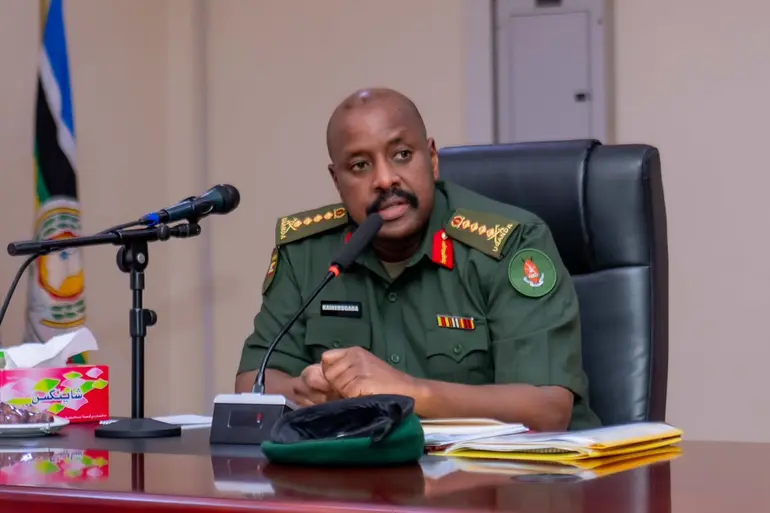
Gen Muhoozi Kainerugaba posted on X demanding an apology from Maj Gen (Rtd) Kahinda Otafiire within one week, warning “or else he will see.” “I hear my junior MG. Otafiire made some statements in parliament against me,” Muhoozi wrote — a framing worth pausing on, since Otafiire’s September 30 address never mentioned Muhoozi by name, and Muhoozi himself has not publicly specified which part of the speech he considers directed at him. That ambiguity has become a story in its own right: Muhoozi’s reaction is effectively confirming, by implication, that he interprets Otafiire’s general warning about “a General who prefers violence” as being about him specifically — an inference Otafiire has not had to make explicit, because Muhoozi made it for him.
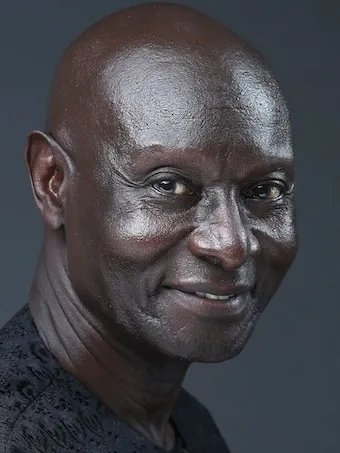
Otafiire’s actual parliamentary remarks, delivered while presenting his ministry’s 2025/26 sector performance statement, were framed as broad reflections on political tolerance rather than a targeted attack. “The whole mark of civilisation is how people resolve contradiction without violence. When you see a General who prefers violence as the best means of solving problems, then there is a problem,” he told MPs, adding that “the greatest Generals I know of are those who resolve problems without shooting a bullet.” He extended the same argument to NRM’s relationship with the opposition, describing opposition politicians as “our mirror of reflection” and urging the ruling party to be “magnanimous in victory” while allowing those who lost elections to “retain their right to be heard.”
What makes Muhoozi’s ultimatum land differently than it might otherwise is the use of a specific phrase: “my junior MG.” Otafiire is a veteran of the 1981-86 NRA bush war and one of its original commanders — a figure whose standing in the movement’s founding mythology predates Muhoozi’s own military career by decades. Muhoozi, by contrast, is the serving CDF, meaning the current operational hierarchy places him above Otafiire in active rank, even as Otafiire holds deeper historical standing within the NRM’s founding generation. That tension, seniority of history versus seniority of current command, is doing a lot of quiet work in how this dispute is being read across Ugandan social media, and it’s part of why reactions have split so sharply rather than falling along predictable party lines.
Otafiire did not wait for the week to run out to respond substantively, even if not through a formal apology. At a public lecture at Valley University of Science and Technology in Bushenyi, fielding questions from students about his leadership record and his relationship to the Patriotic League of Uganda, Otafiire drew a sharp institutional line: “How do you expect a Catholic priest to preach in a mosque? If you want to understand Sharia, don’t ask Archbishop Odama of Gulu. Go to the mosque,” he said, declining to speak on PLU’s behalf since he does not belong to the organisation Muhoozi chairs. Pressed further, he invoked his own history in the liberation struggle to frame his current defiance: “I fought Idi Amin—was I safe? I fought Milton Obote. I was in Luweero for five years, did I know I’d be here? I would rather die on my feet fighting than live on my knees begging.” That’s about as direct a public refusal to apologise as a sitting cabinet minister can offer without using the word “no.”
This is not an isolated incident in Muhoozi’s recent pattern of conduct. On September 16, barely two weeks earlier, he issued an almost identically worded one-week apology ultimatum to State Minister for Local Government Justine Nameere over remarks attributed to her in a video. Nameere ultimately apologised publicly, while maintaining the footage had been edited and that she had not intended to attack him. That precedent matters for how this current standoff is likely to be read and anticipated: Muhoozi’s ultimatums have, at least once before, produced a public apology from their target, even when the target disputed the underlying premise. Whether Otafiire, given his markedly more defiant public posture and his unique standing as a bush-war founder rather than a more junior political appointee, follows the same path is the open question hanging over the coming week.
None of this is happening in a political vacuum. Otafiire’s parliamentary remarks landed just one day after former UPDF Lt Herbert Matanda Mabonga released a video alleging arbitrary arrests, disappearances and torture at an alleged military safe house, including footage purporting to show opposition activist Sam Mugumya in a weakened state and former Butambala MP Muwanga Kivumbi in a separate clip — footage whose authenticity, date and location remain independently unverified. The UPDF has since rejected Mabonga’s claims outright, describing him as a deserter facing unrelated criminal allegations and dismissing his material as fabricated. Separately, Leader of the Opposition Joel Ssenyonyi has formally pressed government in Parliament to account for Mugumya and others reportedly missing or detained without court appearance, and Parliament has given government two weeks to respond. Set against that backdrop, Otafiire’s otherwise generic-sounding warning about generals and violence acquired a specificity it might not have carried in a calmer political moment — which may be exactly why Muhoozi, even without being named, felt compelled to respond as forcefully and publicly as he did.
Public reaction has split in ways that cut across simple pro-government or pro-opposition lines. PLU executive secretary Daudi Kabanda responded to the dispute with open mockery, posting that “we shall take him to the zoo and he stays with his relatives” — a dismissive, dehumanising line toward a figure who remains a sitting cabinet minister and one of the NRM’s founding military figures. But not even Muhoozi’s own base has been uniformly supportive: one social media user pointedly noted that Muhoozi’s name was never actually mentioned in the speech he’s demanding an apology for, writing “he didn’t mention your name… maybe you didn’t hear him well” — a comment that captures, better than most official statements have, the core ambiguity running through this entire confrontation: a public figure demanding contrition for an insult that technically was never issued, at least not on paper.
What began as a minister’s appeal for political tolerance inside Parliament has, within 48 hours, become a referendum on who holds real authority within Uganda’s ruling establishment — a sitting CDF with a growing political movement behind him, or a founding bush-war commander whose defiance carries the particular weight of someone who has, by his own account, already risked his life for the movement both men claim to serve.






Join the conversation
The Black Examiner values your comments but kindly requests all posts are on topic, constructive and respectful. Please review our commenting policy.